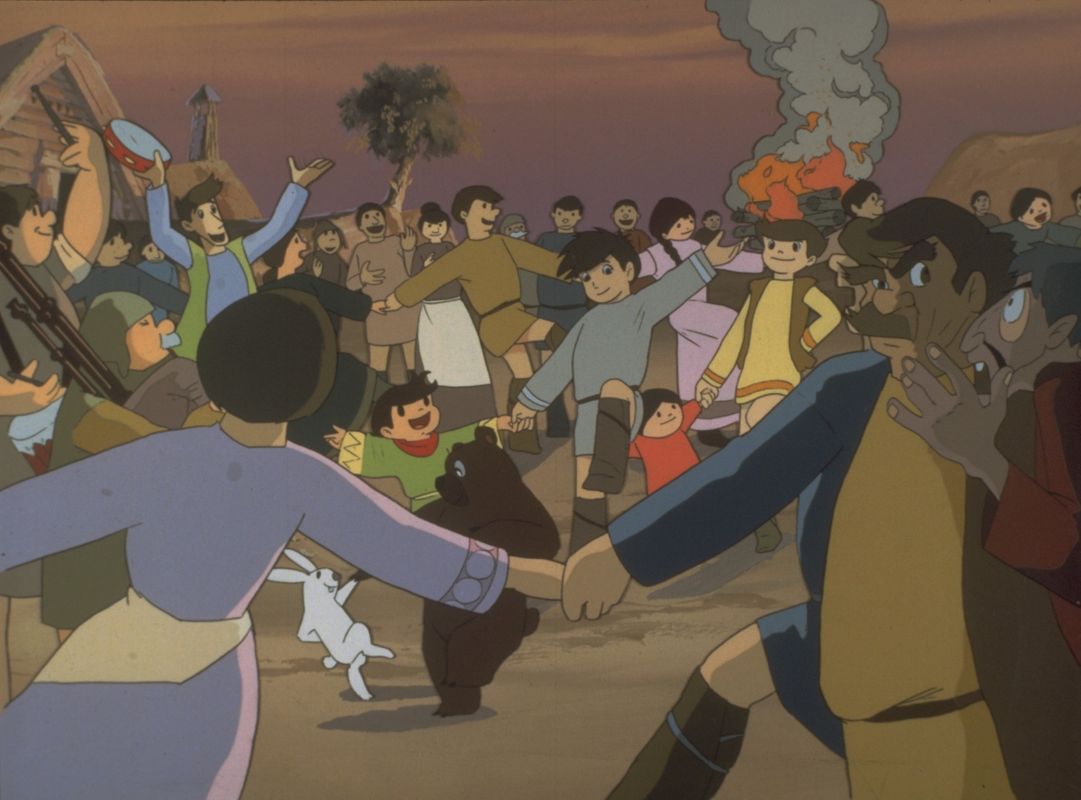
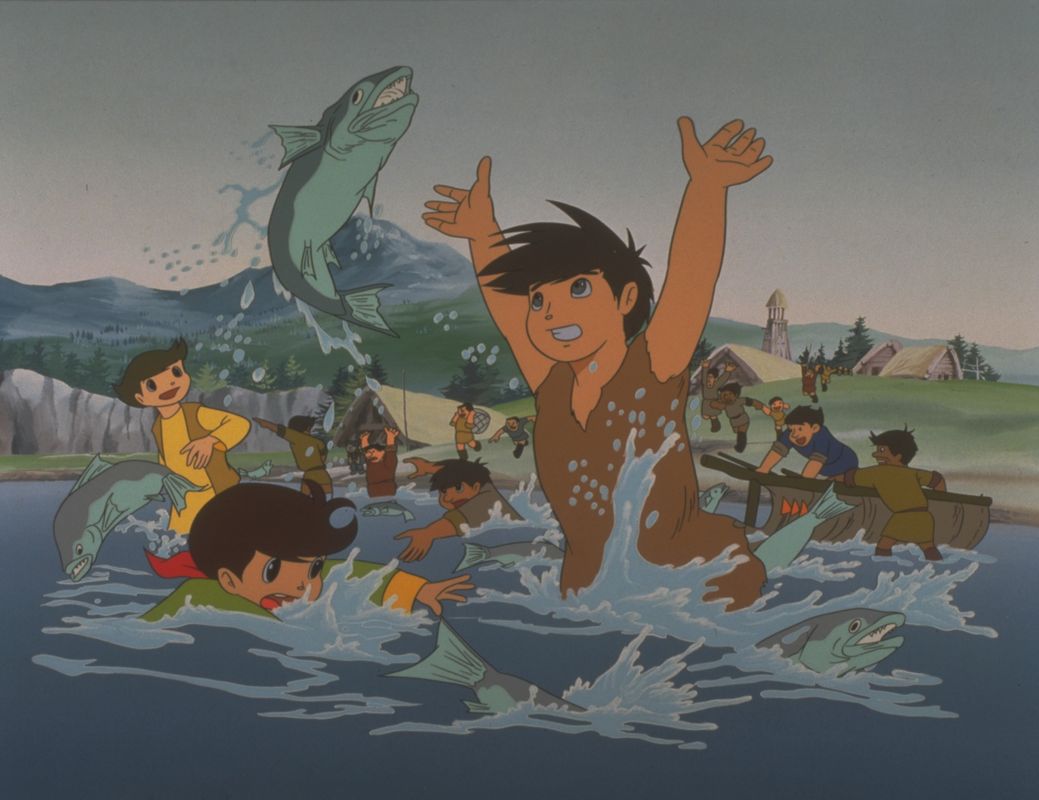
Not only is Horus, Prince of the Sun Isao Takahata’s debut film, it also marks the first collaboration between the acclaimed director of Grave of the Fireflies (1988) en The Tale of the Princess Kaguya (2013) and his protégé Hayao Miyazaki, whose role as key animator ballooned into something for which the credit ‘scene design’ had to be invented.
Taiyō no Ōji: Horusu no Daibōken (sometimes translated as Hols or Little Norse Prince Valiant) became known as the first ‘grown-up’ anime, after the medium’s breakthrough with Osamu Tezuka’s TV series Atom Boy (1963). It was based on an epic by the indigenous Ainu, but transplanted to Iron Age Scandinavia (possibly due to sensitivities surrounding that population’s historical mistreatment by the Japanese).
And although the drawings are less detailed than modern audiences might expect, Horus proves that’s much less important than timing and mise-en-scène. Just watch the dynamic opening scene (echoing Takahata’s earlier TV series Wolf Boy Ken), in which young Horus is chased by a pack of wolves, keeping them at bay with an axe on a long rope, until a rock giant comes to his aid.
The socialist message, about villagers who can only defeat their oppressor through communal resistance, was popular with 1968’s students, but not with Studio Toei (with whom the animators were embroiled in a major labour dispute), which pulled the well-received film from cinemas after just ten days. Which led to Takahata and Miyazaki leaving Toei and, some years later, founding Studio Ghibli together. And the rest is anime history.