Ukraine has a rich history of innovative filmmakers. During the 1920s, they worked within the newly formed Soviet Union and faced propaganda, censorship and political control. Even so, they created films that would have a lasting influence on international cinema. Their work also preserves images of a Ukrainian culture that was repeatedly suppressed and erased in the decades that followed.
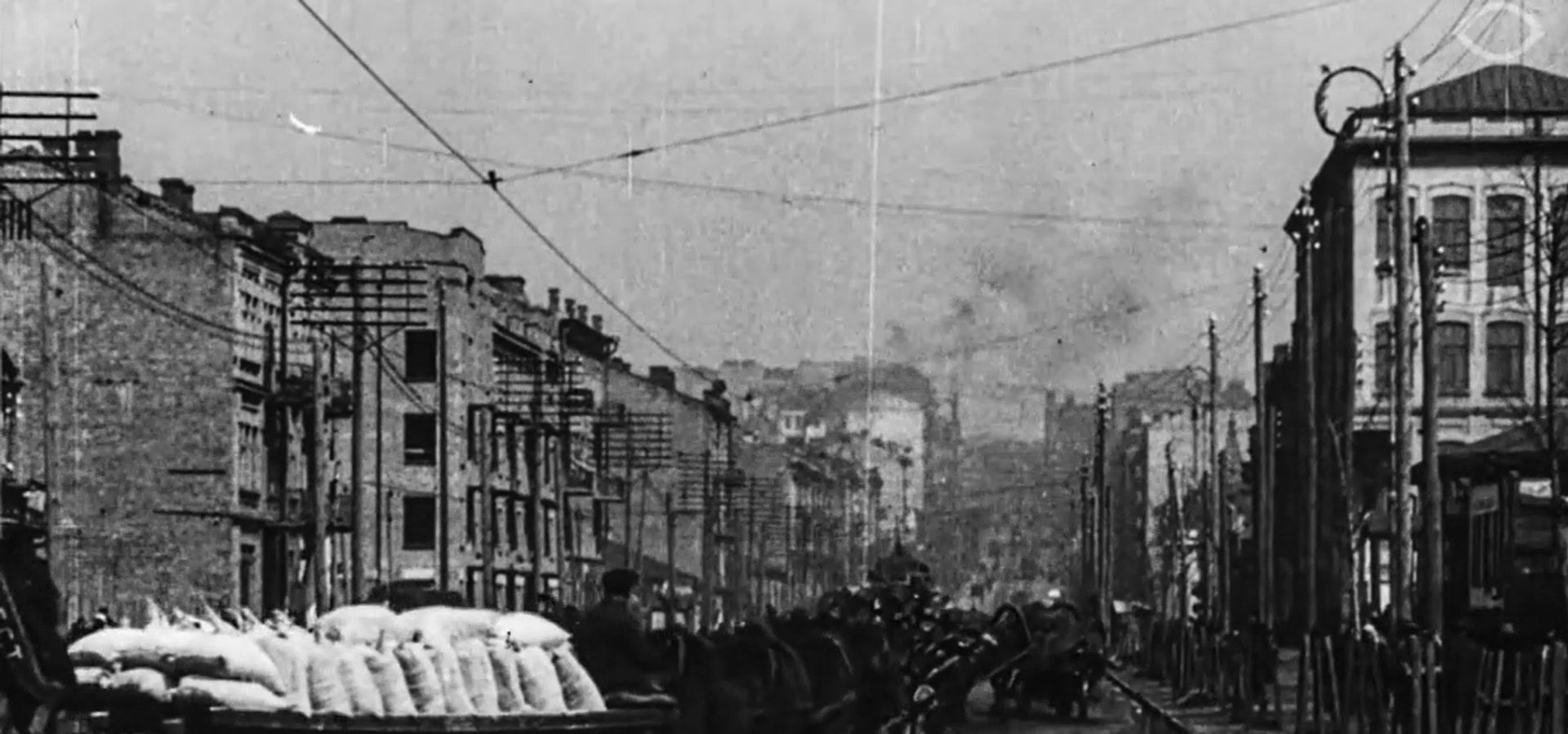
In Spring, made in 1929, is Mikhail Kaufman’s poetic documentary about life in and around Kyiv. The city awakens alongside nature: snow melts, streets fill up and people return outdoors. Symbols of the Soviet Union are visible, but above all the film is a rare and affectionate portrait of Ukraine at the end of the 1920s.
Sam Sobi Robinson, also known internationally as Robinson for Himself, follows young Vasja. He devours adventure books and dreams of living like his literary heroes. One day he runs away to begin a grand adventure of his own. Reality proves considerably less romantic than his imagination.
The children’s film was intended to warn young audiences against Western adventure literature, but the filmmakers’ own admiration for those stories is difficult to miss. Its exuberant fantasy sequences, in which Vasja becomes the hero himself, were precisely what led to the film being banned. It remained on the shelf for almost a century, until the German Bundesarchiv restored it in 2025 as part of a project devoted to Ukrainian film heritage.
Together, In Spring and Sam Sobi Robinson form part of Ukraine’s history. They also show that images, stories and culture cannot simply be erased.
About the Netherlands Silent Film Festival
The Netherlands Silent Film Festival (NSFF) in Eindhoven is the largest festival dedicated to silent film in the Netherlands. In this original form of cinema, stories are told through images, expression and music. Without spoken dialogue, the inventiveness of the filmmakers takes centre stage.
At the festival and through programmes presented throughout the year, NSFF makes the cinematic heritage of the silent era accessible to a wide audience. It does so through film screenings, educational projects, workshops and lectures. The creativity and innovation of early cinema deserve to be seen and heard again.
For its programme, the NSFF team follows current developments in the international world of silent film, from recent rediscoveries and restorations to new research. Audience favourites share the bill with hidden gems, all presented with live musical accompaniment by international film musicians.